
Your Backyard is a Wildlife Refuge Waiting to Happen
By Jade Christensen
The classic bright green lawn is becoming a thing of the past. Homeowners across the region are finding meaningful ways to transform their yards into habitat, whether through small additions like alternative ground covers or complete yard overhauls.
Here are three accessible, impactful approaches to increase habitat connectivity and support local wildlife.
Dead Hedge
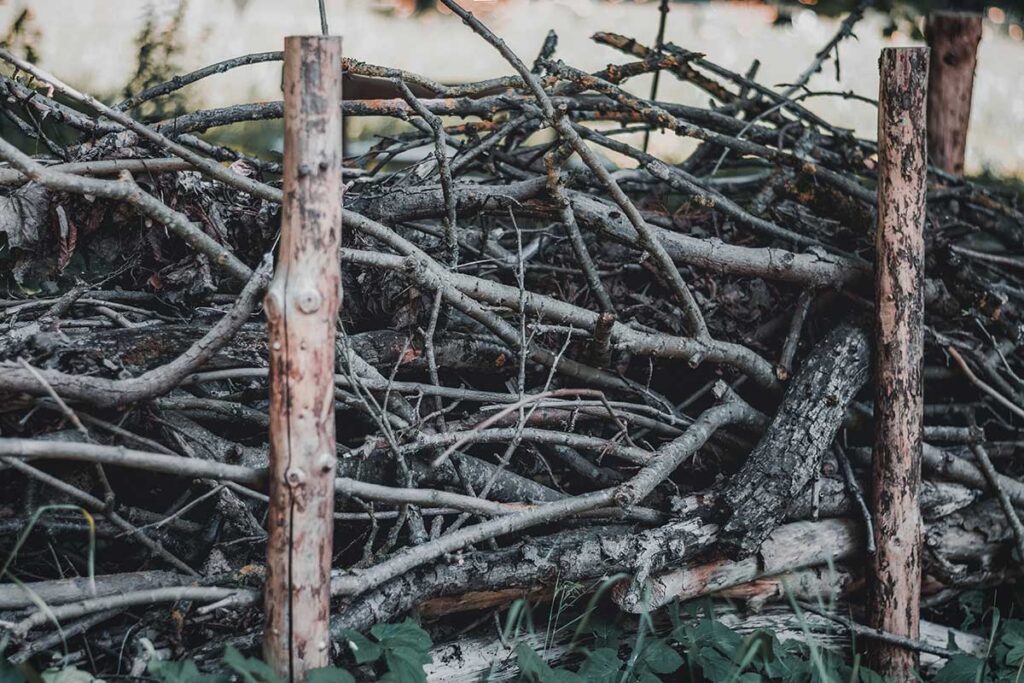
A dead hedge is an upright structure of woody cuttings woven between vertical stakes, typically made from sturdier branches cut from trees or shrubs. What might look like a brush pile at first glance is actually a critical resource for local wildlife: a nesting site for native birds, shelter for small mammals and rodents, and a home for native pollinators.
Dead hedges are simple to build and double as a practical destination for pruned branches and invasive cuttings. They can even provide natural privacy screening without the cost of traditional fencing.
Nurse Logs
If you have a woodland edge or wooded area behind your home, adding nurse logs is one of the best things you can do for the surrounding ecosystem. A nurse log is a fallen tree that, as it decays, provides seedlings with shade, nutrients, moisture, and protection from pathogens, nurturing the next generation of plant life.
Grass and non-native plants actively strip nutrients from the soil, and nurse logs help restore what has been lost over time. They also create an ideal habitat for salamanders, beetles, and other beneficial insects.
Invasive Removal
Removing invasive plants is one of the highest-impact actions you can take for your yard and the surrounding landscape. Two species deserve particular attention in our region.
The first is burning bush. Despite its striking fall color and some value as bird food, it actively degrades soil health and crowds out native plants through its dense root system and prolific seed production, making revegetation difficult long after removal.
The second is Asiatic bittersweet, a vine commonly seen climbing trees and structures. It spreads aggressively, can kill mature trees, and is extraordinarily difficult to eradicate once established. Both species make excellent material for your dead hedge, which is a satisfying way to put invasives to work.
Thank you for supporting wildlife
These three practices are practical steps anyone can take to strengthen habitat connectivity and support the wildlife around us. Every action, no matter the scale, contributes to a healthier landscape. Now is the time to start.
Resources
Wisniewski, Allie. “Nurse Logs: Healers of the Forest. American Forests.” https://www.americanforests.org/article/nurse-logs-healers-of-the-forest/
“Building a Dead Hedge for Wildlife.” RSPB. https://www.rspb.org.uk/helping-nature/what-you-can-do/activities/build-a-dead-hedge-for-wildlife
Bright Ideas is brought to you by PCAT, which meets the fourth Tuesday of the month, 6 to 7:30 p.m. All are welcome. FMI: Portlandclimate@gmail.com. Or visit http://facebook.com/PortlandClimateActionTeam.