
By Jade Christensen
We love our pets; that’s not up for debate. But here’s something worth thinking about: dogs and cats are, by nature, non-native to our local ecosystems. The small daily choices we make as pet owners add up in ways that might surprise you.
The Scoop on Dog Waste
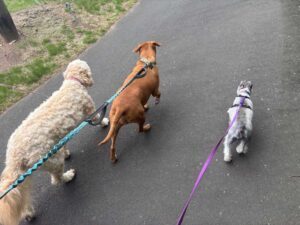
Nobody wants to be the person who doesn’t pick up after their dog. And yet… it happens. Here’s why it matters beyond just being good manners.
Dog waste isn’t as natural as it seems. Because of their diets, dog feces contain elevated levels of nitrogen and phosphorus. When those nutrients wash into waterways untreated, they fuel excessive algae and weed growth, throwing entire aquatic ecosystems off balance (USDA, 2011).
We’re actually seeing this play out right in our own backyard. Hinckley Park in South Portland, a beloved spot for dog walkers, experienced a cyanobacteria bloom in 2024. Cyanobacteria (also called blue-green algae) thrive when excess nutrients accumulate in slow-moving water during warm months. Research confirms a direct link between pet waste and these blooms (Town of Concord, Massachusetts, 2025). In other words, skipping the pickup bag has real, visible consequences for places we all enjoy.
The fix is simple: bag it, bin it, done.
Cats and the Great Outdoors
Cats are natural hunters. But when they roam freely outside that instinct can have a serious impact on local wildlife. A landmark study by the Smithsonian Conservation Biology Institute and the US Fish & Wildlife Service estimated that free-ranging domestic cats kill between 1.3 and 4 billion birds and 6.3 to 22.3 billion small mammals in the US every year (Loss et al., 2013).
Your cat bringing home the occasional bird might feel like a minor thing. But multiply that across millions of households, and it becomes a much larger issue.
Before you worry that keeping your cat safer means keeping them miserable, there are genuinely great alternatives:
- Build a catio. A simple screened enclosure lets your cat soak up fresh air, watch birds, and lounge in the sun, all without turning into a wildlife threat.
- Try leash walking. Yes, cats can walk on harnesses! It gives them outdoor enrichment and gives you peace of mind that they’ll make it home safely.
The Bottom Line
None of this is about guilt. It’s about collective impact. Your one pet may seem like a drop in the bucket, but when every pet owner makes the same small choice, those drops become a flood (for better or worse).
Pick up the waste. Explore the catio. Take the extra step. Our local wildlife and our pond at Hinckley Park will thank you.
Resources
- USDA. (8 March 2011). Pet Waste Disposal Systems Help Protect Water Quality. USDA. https://www.usda.gov/about-usda/news/blog/pet-waste-disposal-systems-help-protect-water-quality#:~:text=Dog%20waste%20contains%20nitrogen%20and,%2C%20a%20disease%2Dcausing%20bacteria.
- Town of Concord Massachusetts. (2025). Understanding Cyanobacteria. Town of Concord Massachusetts. https://www.concordma.gov/3577/Understanding-Cyanobacteria
- Loss, Scott R., Will, Tom, Marra, Peter. (29 Jan 2013) The Impact of Free-ranging Domestic Cats on Wildlife of the United States. Nature Communications
- Stormwater Center. Pet Waste and Water Quality. Stormwater Center. https://www.stormwatercenter.net/pollution-prevention/pet-waste/