Layne’s Wine Gig Presents
Layne’s Dry January
By Layne V. Witherell
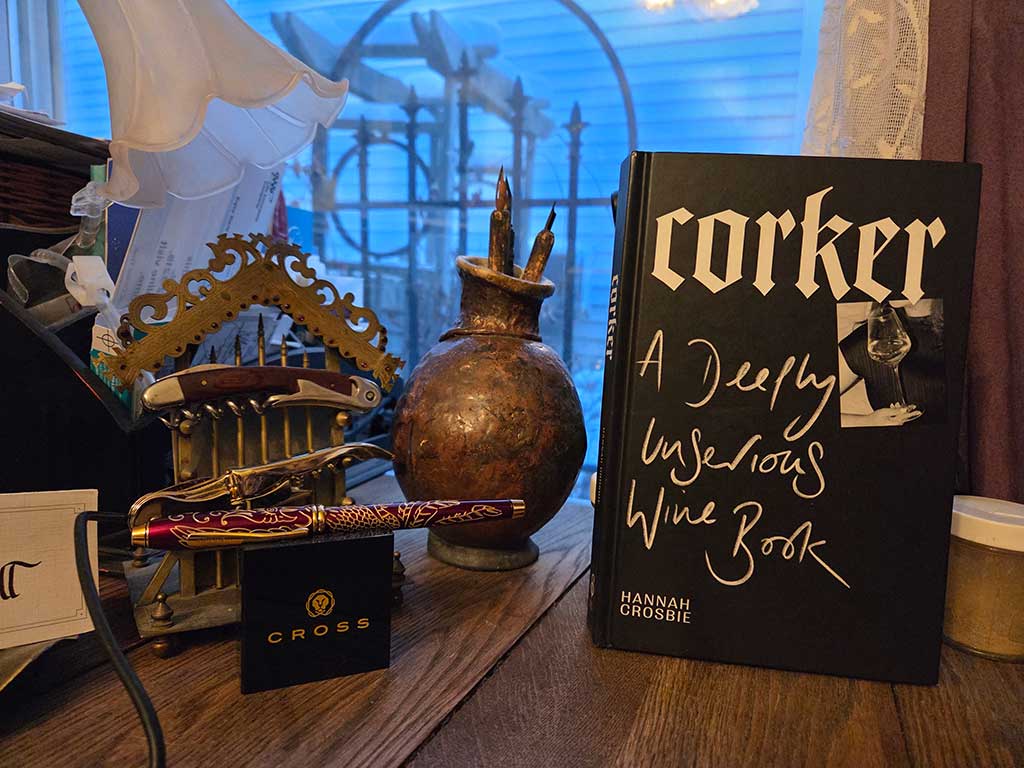
“I love wine. I love everything about it. I love pouring it, swirling it, and holding it up to the light to watch it glow… I love scrubbing it out of white cotton shirts, off my purple teeth, off other people’s sofas.”
-Hannah, Crosbie, “Corker: A Deadly Unserious Wine Book”
The origin story of Dry January is a British group called Alcohol Challenge UK that stepped right out there to buzzkill our lifestyle of enjoyment, and mainly, to encourage sales from their app. Like all clown car processions, they are complimented by doppelgänger organizations such as Sober October and Dry July. A thrilling example of neo prohibition spawned via the internet.
For me, a lifelong lover of wine, January was a month of introspection. Why do we have anti-alcohol fads? Runaway fads, I suppose, are here to stay. First there was the “natural wine” voodoo magic craze. Then the “made by chicks”, same dance with different players fad. Also, there was vegan! Then there was the enhanced margin, post-covid pricing driving even the humblest wine skyward.
Of course, there was the Cameron Diaz creation Avaline, a yoga mat level purity wine in the form of classic margin embellishment. For all the wacko historical revisionist thoughts rolled up into one, the most up to date version is Elaine Chukan Brown’s book “The Wines of California.”
I decided just for fun for this Dry January to seek out and only drink wines that were truly dry. Easy, you say? Maybe not.
CHARDONNAY
Like the fashionable brand Butter, there are countless California Chardonnay copycats out there in abundance. They come in the form of increased malolactic fermentation coupled with dollops of toasted oak chips and CY3079 yeast. These ingredients combine to produce a soft-drink clone of wine that barely resembles the real thing. Put it altogether and we receive the wonderland of buttery chardonnay.
A slurp fest for the senses? Not all California Chardonnays are sweet, but they are fuller in body and may appear to be sweet. Nonalcoholic Chardonnay (an oxymoron) is dry – the same way a flavorless piece of cardboard is dry. “Dealcoholized wine is a poor substitute for the real thing,” noted the esteemed wine writer Jancis Robinson.
For real dry, totally lacking in residual sugar, and tasting of character you must look for the wines from France. Most notably the little towns and regions of Burgundy, Bourgogne, Macon, St. Veran, Pouilly Fuisse, etc.
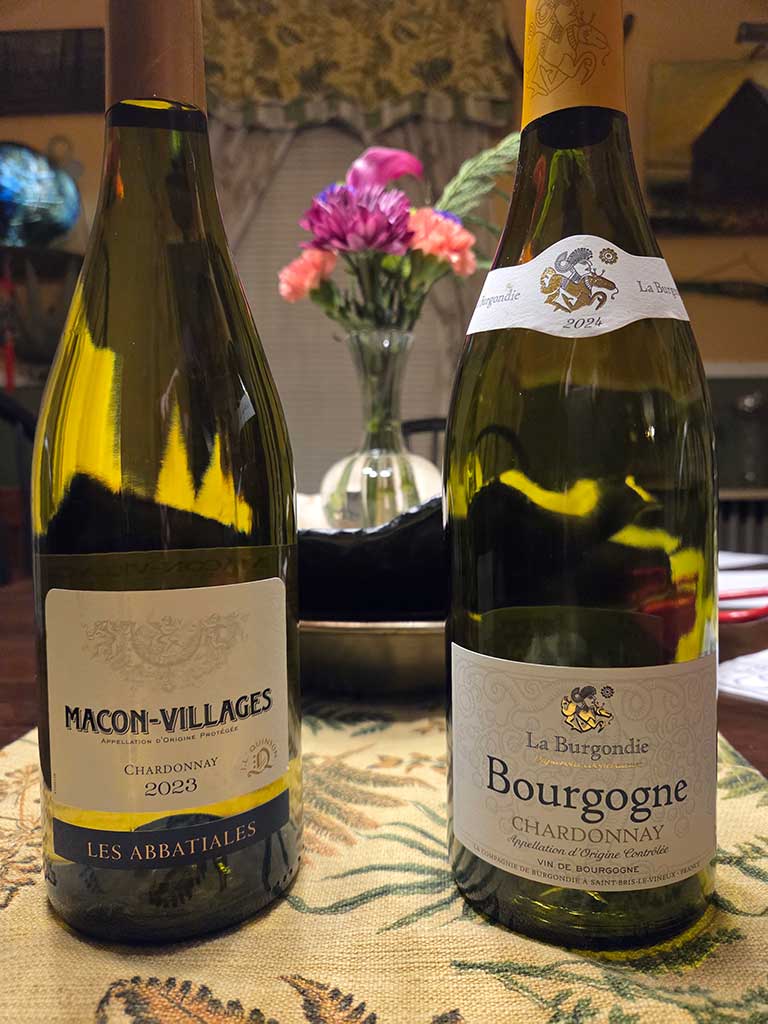
La Burgondie Bourgogne, Burgundy, France, 2024, $10-$15 bottle.
White Burgundies can run as high as $40 to $50 for well-known Macon’s. Occasionally the name of the grape Chardonnay will appear on the label, though sometimes not. That’s why we love the French.
Dry, silky, with fresh minerals. For fun, put it next to a California buttery Chardonnay to see the difference. French White Burgundy is a lobster’s best friend as a pairing. The minerals and acidity cut right through the sweet meat of the lobster.
RIESLING
Nothing about dryness of Riesling is simple. This is the reason people avoid it. Is it too dry for me or too sweet? The problem is compounded by the most popular American Riesling, Chateau St. Michelle. They discovered decades ago that at 2% residual sweetness we couldn’t tell the difference. So, we just bought it and drank it. Recently, I discovered a truly remarkable dry Riesling.
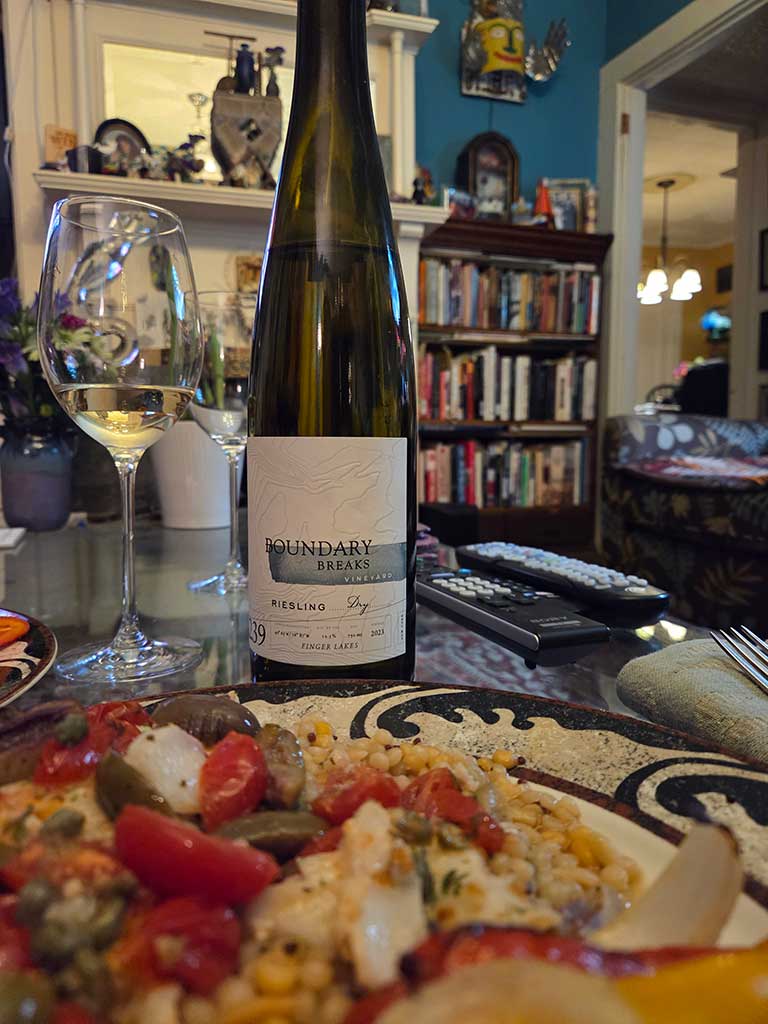
Boundary Breaks Vineyard, Riesling Dry, 2023, Finger Lakes, NY, $19.99 bottle.
Explosive fruit meets vibrant acidity. It took decades of growing grapes in the Eastern US to do it right, and this is it. Sure, it’s the vines and the soil, but the key is the harvest. Picking at ripeness, not too late, before the rain and rot set in. You don’t use a calendar to achieve this greatness. You use a stopwatch – and a lot of pickers to cover fifty acres.
They were the first Eastern US wine to break into the yearly Wine Spectator Magazine’s top 100 wines of the year. No small feat. Seek this one out for your post-Dry January celebration. Pair it with Judy’s famous dish of baked cod and roasted peppers.
RED WINES
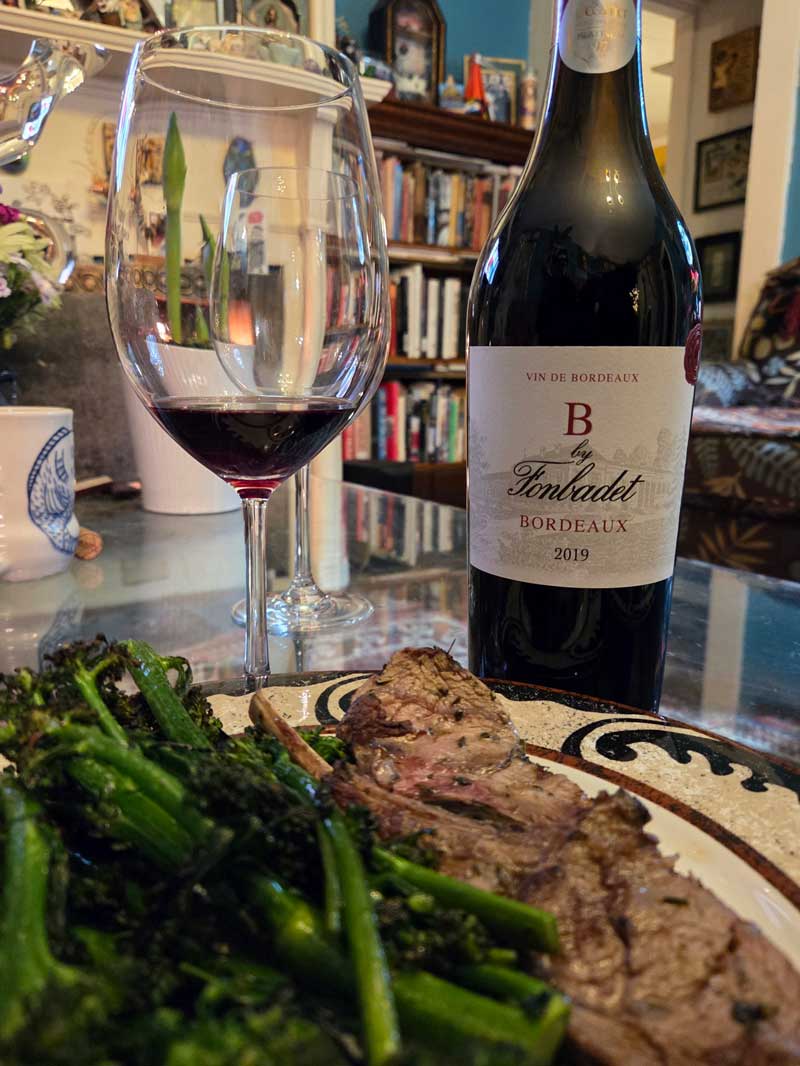
They are difficult to figure out because of that magical added ingredient known as Mega Purple. Nothing mysterious. This highly intensified grape concentrate will provide depth, mouthfeel, and a hint of sweetness to a weedy, vegetal wine. It is widely used and can be easily identified by taste alone.
For a crash course, place a glass of B by Fonbadet Bordeaux, 2019, $7.99/bottle (one of our house wines) alongside a Yellowtail Shiraz, Australia, $7.99. The Bordeaux is dry with no residual sugar, and the Yellowtail is a Mega Purple fruit bomb.
We like the Bordeaux alongside a burger and fries or lamb chops. The Yellowtail is perfect with sweet and sour wings with a sweet barbeque dipping sauce.
THOUGHTS ON DRY JANUARY
THE PROFESSIONALS:
Many reports on alcohol and health. There simply isn’t any consensus. A good read is “Why I’m skipping Dry January – As a public health scientist, I weighed the evidence,” by Robert M. Kaplan, Senior scholar at Stanford School of Medicine Clinical Excellence Research Center in Stat.
THE COUNTRIES:
“The month-long rejection of alcohol is an affront to centuries of civilization,” noted The Telegraph in January 2026 article, “The French are fighting back against ‘Dry January’. Here’s why you should too.”
Just drink more French wine to curtail their having to rip out thousands of acres of ancient vines because we are too lazy to get off our precious phones! Their rallying cry is to rename it “French January”.
THE PRESS:
“Who says a bar needs booze?” asks Andrea Strong in Bon Appetit, December 30, 2025, “What you Need to set up a Nonalcoholic Bar, from Spirts to Shakers.”
I have to hand it to Ms. Strong. She is a lawyer, a freelance wine writer and a savvy businessperson. “All products featured on Bon Appetit are independently selected by our editors. However, we may receive compensation from retailers and/or from purchases of products through these links”.
I must say when the words “expertly curate a beautiful nonalcoholic bar at home” appear, then it is time for me to press the FAD ALERT button and get the hell out of the article before I get bombarded with ads from brands and companies they represent. Been there, done that.
Being a longtime wine writer myself, I know when you desperately need to create a seasonal piece versus when your editor calls and says, “Hey, have I got a great idea.”
THE WINERIES:
Brooks Winery is in Amity, Oregon, and yes, they do hedge their bets by producing $35.00 Rieslings as well as a $50.00 Pinot Noir.
“A leader in purpose driven hospitality,” notes their recent press release, “Brooks Wine unveils Sip & Savor Series —A year-round Celebration of non-alcoholic Craft Drinks, Wellness & Community.”
This is a classic case of having your cake and eating it too. Their press release contains all the current cliches from “ritual and rest to wellness to sober curious and menus thoughtfully curated with non-alcoholic wine.”
What do I know about Oregon wine? My Oregon wine resume is there for all to experience on The Oregon Wine History Archive April 2025 Interview.
Several things are certain about those “Dry” months is that they will attract numerous organizations interested in your credit card number. As well as internet people just wanting to spout off. As well as medical types weighing in… Plus, journalists… And don’t forget the wineries.
I raise my glass of dry wine, while shuddering to think about the fads.