By Nancy English
The little-known rental database on the website portlandmaine.gov holds key information for prospective tenants throughout the city. Owners or their agents are required to submit monthly rents of long-term rental units when registering them with the Housing Safety Office.
Find good rents
Perhaps the best way to start this research is to find a multi-unit building that you admire for reasons like age, condition, location. The building address leads to the rental history.
The page to start on is: https://selfservice.portlandmaine.gov/EnerGov_Prod/SelfService#/search.
In the first box after the word “search” choose “License” and then across on the right click on the “Advanced” drop-down menu.
In the Advanced drop-down, choose “Long Term Housing Registration” for the License Type and, for example, enter the name of a street (but don’t use the words “street” and “avenue” or abbreviations such as “St.” and “Ave.”) in the address field. For license status, choose “Issued.”
For example, with “Sherman” as the street requested, 37 properties come up. Click on the hyperlinked license number of a property to access the rental price history. From the options below the first info box, click on “more info” and you are there.
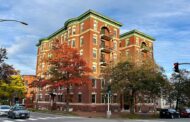
The building at “120 Sherman” for example has three units, each with three bedrooms, and each rent for between $1,550 and $1,750. That’s below market rate.
Check for Complaints
Along with what is charged for rent, a renter will want to know if the landlord takes good care of the building. Back in the citizen self-service site, instead of “License” choose “Code Case” and enter the street number and name. Only one complaint appears, from 2019, for 120 Sherman, which suggests a well-cared-for property.

-Photo by Tony Zeli
One consequence of rent control, which established a base rent in 2020 and limits increases, is that properties rented at below market rate in 2020 are still rented at below market rent unless they have been turned into condominiums and sold.
Why Not Buy
Local landlord Ned Payne shared another way to pay less for rent. Do exactly what he did when he was 30 years old. Buy a multi-unit.
“An FHA owner-occupied mortgage requires 3.5 percent down,” he said. A three-unit, 124 Sherman Street, is listed for sale at $789,000, and Payne believes it could be purchased for less after being on market for more than 40 days. “At $750,000, the deposit would be $26,000. But income is most important,” he said, to qualify for this kind of loan.
A lender will count 75 percent of the rent as income, he said. This building has two three-bedroom apartments that rent at $2,700. A successful buyer, who would live in the third, two-bedroom unit, would need to add another $547 to cover the mortgage payment, Payne said, leaving income available for repairs and capital improvements.
“You still have to be able to afford things that go wrong,” said Josh Musica, 24. Renting is not cheap, he said. “But I love being in a walkable and bikeable community and I will and do pay for that.” He rents a place on Spring Street. “I am interested in being a homeowner.”
Lower Rents Are Out There
For those seeking great low rent, be aware that the best landlords with the lowest rents have tenants who rarely move. Still, if you find a good building, Payne suggested introducing yourself to the owner with references and a long lead time.
A 201-unit Avesta development at 89 Elm Street is expected to open in May 2027. If your income fits the requirements, around 60 percent of the area median income, the rents are reasonable. Resident income levels include one person at $58,440, two people at $66,780, three people at $75,120. You can add your name if interested here: https://www.avestahousing.org/find-an-apartment/.
The need is there, the demand is there,” said Anthony Ronzio, VP for Strategic Partnerships at Avesta Housing. “This is the biggest project in Avesta’s history.” With more than 70 additional units planned nearby in Bayside, also income-restricted, many opportunities will open up in the near future.