
We’re All in This Together
COP30 – A Climate Conference without Official US Representation
By Susana Hancock
One desk remained conspicuously empty as decisions were gaveled in during the closing plenary of the United Nations climate summit, COP30.
While the United States remains a party to the Paris Agreement through January 20th, for the two weeks of COP, our nation’s nameplate rested untouched in its holder in the main hall in front of two empty chairs.
In pre-COP meetings, we had been told to anticipate the US and to expect obstructionism associated with petrostates. However, in my negotiation tracks the only direct mention of the USA concerned earlier economic and diplomatic threats made by the Trump Administration to delay (successfully) a maritime net-zero framework.
The absence of the United States was called out by a few, including the President of Colombia and the UN Secretary General. But it was welcomed by nearly all others gathered in the Brazilian Amazon.
American Leaders Who Did Attend
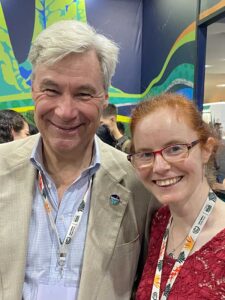
In the end, Sen. Sheldon Whitehouse was the lone US federal representative, a one-person strong unofficial congressional delegation. He wasn’t there representing the US. However, along with some city- and state-level elected officials and VP Al Gore, Whitehouse and others demonstrated a tireless commitment to climate action within the country.
Sen. Whitehouse offered ways in which the US can advance climate policy under the Trump government. For example, supporting a fee for polluters and tackling plastic pollution.
In a quieter role, the likes of Sue Biniaz, Trigg Talley, and Todd Stern, all former American climate leads and architects of global policy, were also there. This trio was not just in Belém to feel the heat (and humidity) of the US dismissal of the climate crisis. They sought to maintain relationships and frameworks for the country to come back.
Biniaz shared how the country had been, somewhat surprisingly, warmly welcomed following our previous withdrawal from the Paris Agreement. Not only had the previous Trump Administration spent four years chiseling away at the global pact, but the Obama Administration had lobbied hard for the inclusion of elements in the original Agreement that had since backfired.
The country’s current rollbacks on environment policies could yield 1.3 million more fatalities. But be sure, this isn’t necessarily a death sentence for future US engagement.
Dr Susana Hancock is a glaciologist working at the science-policy interface. COP30 is the 7th UN climate summit she has attended.





One Comment
Pingback: The US Steps Away – What’s Next for the Global Climate Effort - The West End News