PART 1
Uganda – Not JUST Another Safari
By Nancy Dorrans
It was an honor and the ultimate thrill of my adventurous life to journey to Uganda and trek with Dr. Gladys Kalema-Zikusoka, Uganda’s first wildlife veterinarian into the Bwindi Forest National Park. Our hour-visit with the Binyindo family of mountain gorillas was a definite highlight towards the end of our twelve-day journey.
However, before we would meet the gorillas, my good friends Anne, Elaine, and I spent a week exploring Uganda’s diverse landscapes to the north: its wildlife-rich national parks, bustling communities, and the mighty Nile River.
Here is Part 1 of our Adventure in Uganda that was Not JUST another Safari.
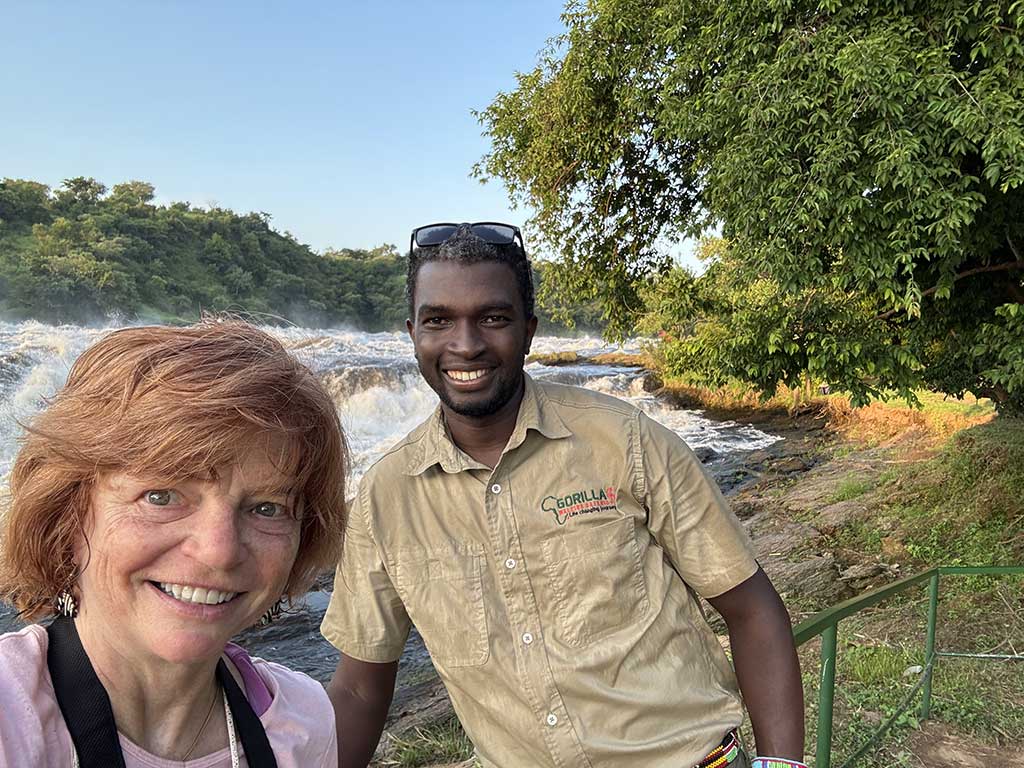
Our arrival day in Entebbe began with a warm welcome from our tour operator Alex of Gorilla Walking Safaris.
We enjoyed a delicious lunch at our Papyrus Guesthouse. Later, we headed by wooden boat across Lake Victoria to the Mabamba Swamp in search of the ever elusive Shoebill bird. Once thought to be a stork, the experts now considered it to be in the pelican family. After a windy ride across the lake, we transferred to a smaller swamp boat. Thanks to our scout Maria, a lone Shoebill was soon spotted. It showed us its prehistoric face and huge wingspan.
There were also tons of noisy Pied (black and white) Kingfishers, colorful Malachite Kingfishers, and a few yellow Weaver birds and their hanging nests! We were already deep in the wild and this was just day one!
The next morning, we flew in a small bush plane from Entebbe to the dirt landing strip near Murchison Falls National Park.
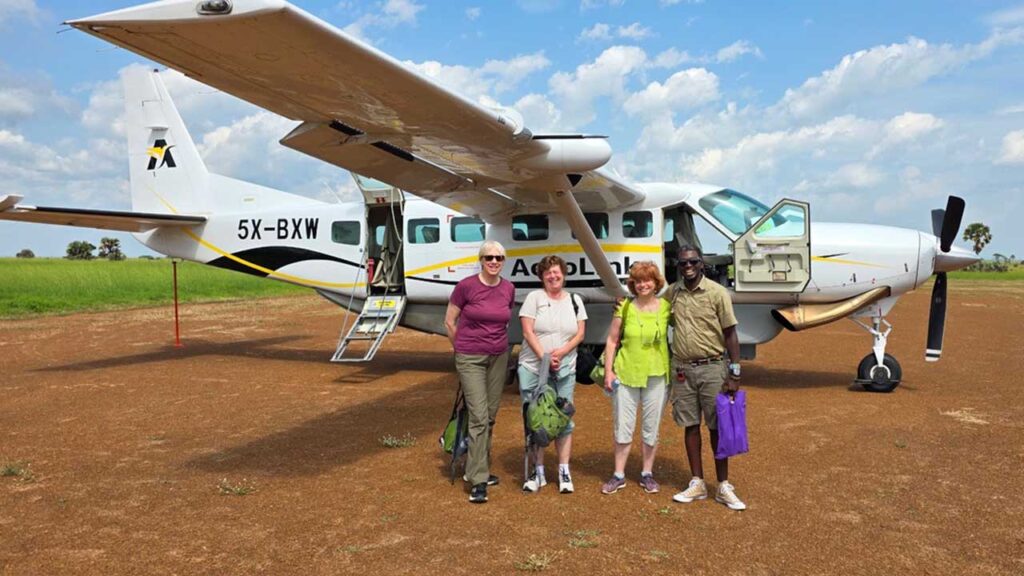
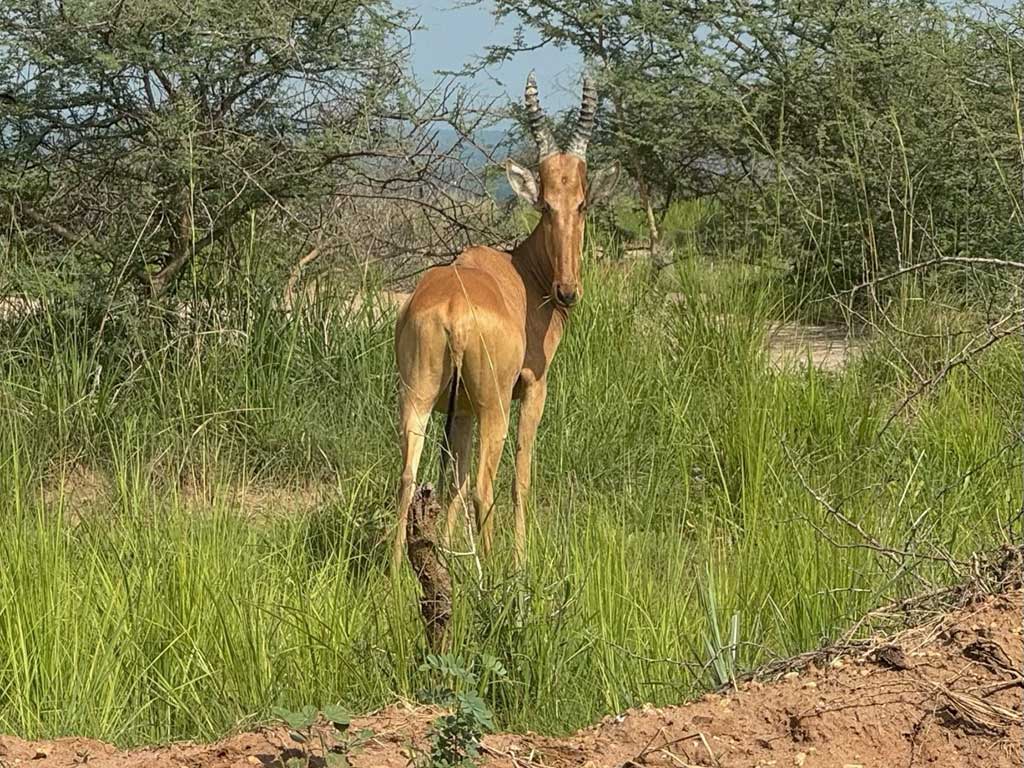
Along the way to our Anyandwe Guesthouse we spotted all types of antelope, like the small Oribi antelope, Uganda Kob, and Jackson’s hartebeest. Not to mention spotting several Rothschild’s giraffe, a warthog, and a mighty yet passively wild herd of Cape buffalo bachelors.
We enjoyed a sunset “sundowner” toast at the “Top of the Falls” where the mighty Nile surges through a narrowing six-meter (20-foot) gorge. The Nile River is the second longest in the world and flows through eleven countries. Its main source is Lake Victoria and it travels 120 kilometers through Murchison Falls National Park. Another wild day!
Kibale National Park & Western Uganda
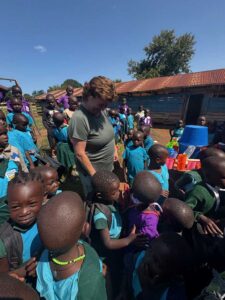
From the Falls we journeyed to Kibale National Park in Western Uganda through local villages and vast stretches of tea plantations. Along the way we visited a local primary school. We gifted them some school supplies brought from home and the teachers thanked us. The students cheerfully sang songs and wished us, “Safe journey,” as they waved us on our way.
Our next days were filled with sunrise and sunset game drives, loads of elephants, hippos, giraffe, a family of Patas monkeys perched on a termite mound, roadside baboons, and a pride of lions that were hard to see through the tall grass.
June is the tail end of the rainy season and one tail was all I spotted of this pride that day. Bird songs filled the morning air with a chorus of hippo, baboon, frog (and perhaps elephants?) calling out after dark.
On to Kibale National Park and an exciting morning of chimpanzee trekking.
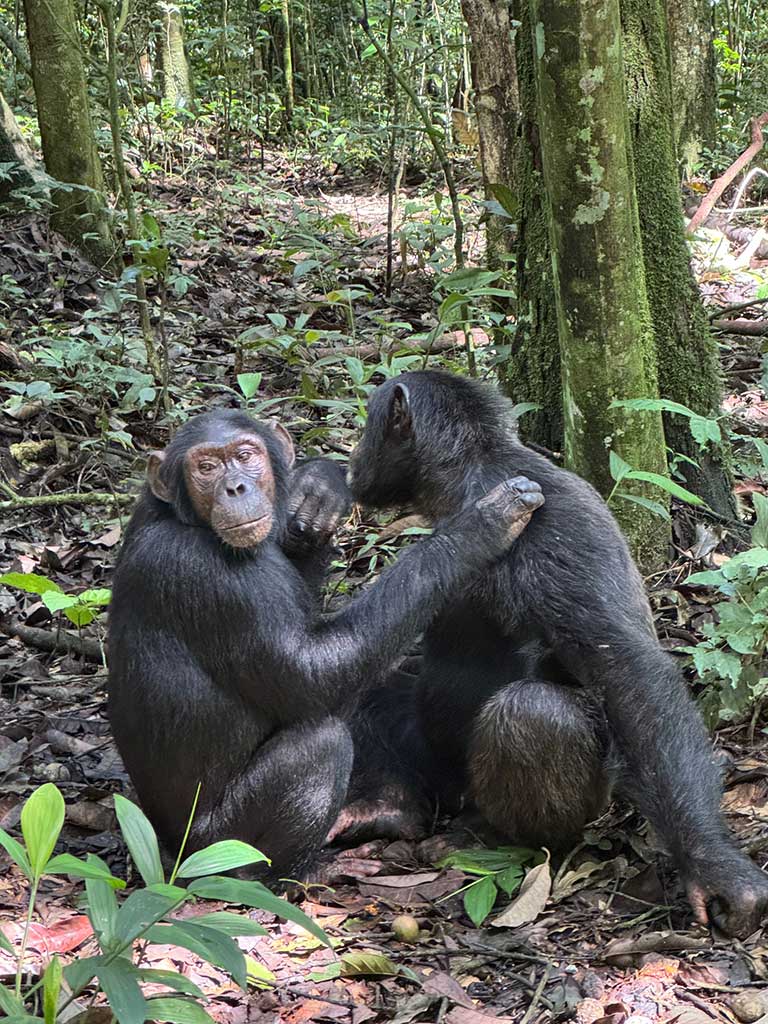
It had rained the night before. So, the chimps were mostly roosting high in the trees. Our guide told us they don’t like to sit on the wet ground. I don’t blame them! But, it didn’t take long for a few of them to venture down from the treetops. They kept a keen eye on us pruning each other, backed up to the trees. However, as uninvited guests in their home, I got the feeling they didn’t always enjoy the company.
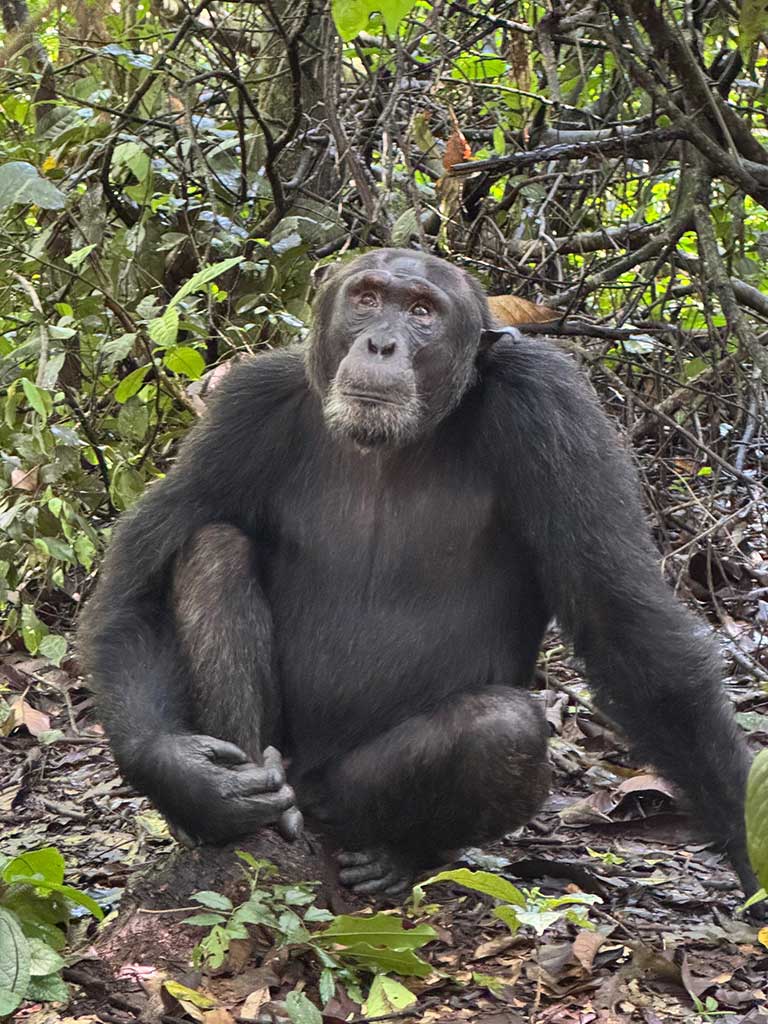
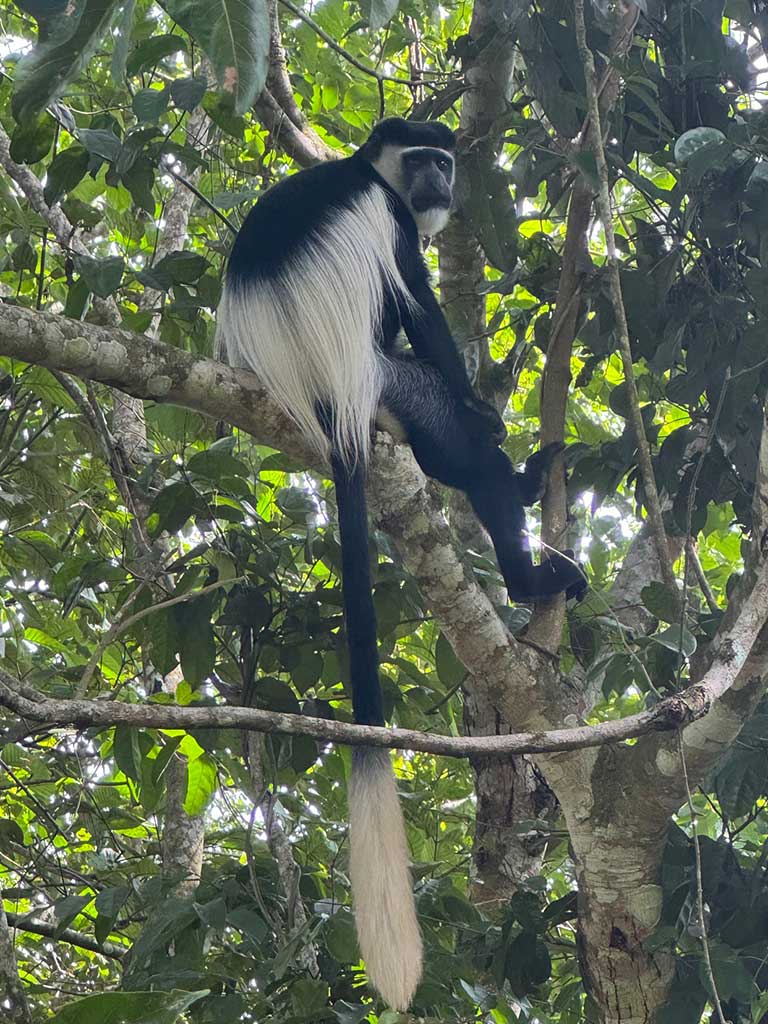
Our morning trek was followed by a walk in Bigodi Swamp with guide Ben and our armed guard Thomas. We spotted five of the eight resident monkey species and three large bird species: two pairs of black-and-white-casqued hornbill, an open-billed stork, and the turaco (often called the lipstick bird).
My favorite so far was the regal black-and-white colobus monkey with a most magnificent tail!
Enjoy your summer and stay tuned for Part II when we step over the Equator into the southern hemisphere. We head to Queen Elizabeth National Park, Bwindi Impenetrable National Park, and the wild waters of Jinja… Definitely, not JUST another Safari.